Cross-Platform PPC Campaign Management: 2026 Pro Playbook
I've watched two ad platforms claim credit for the same sale so many times that I stopped trusting either dashboard. Running Bloomstories at $100K+ a month across Google, Spotify, and Apple Search Ads taught me the real skill: pointing every channel at one outcome instead of letting each optimize in its own silo.

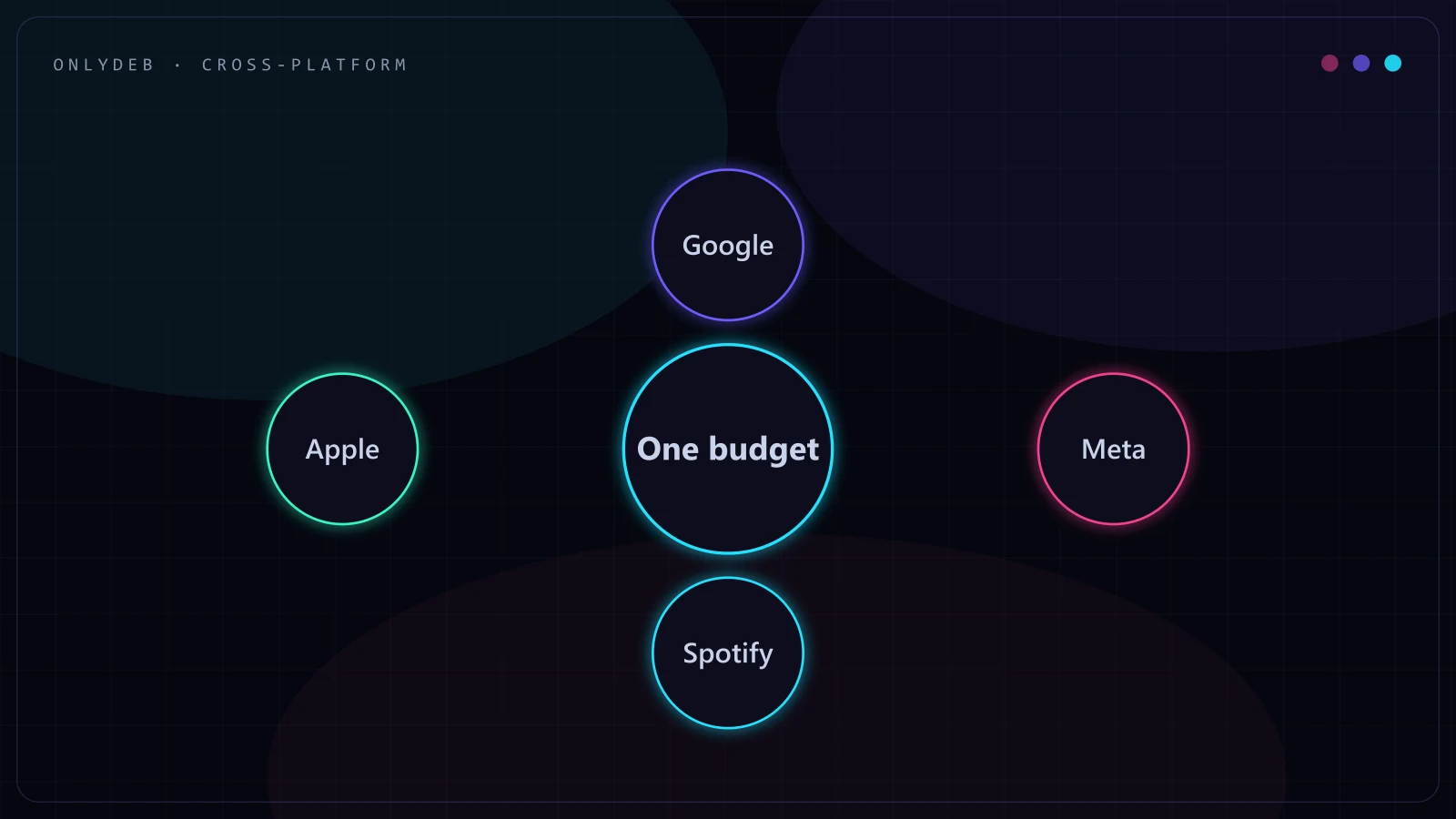
Why Cross-Platform Strategy Matters in 2026
Early in my career I treated each ad platform like its own little kingdom: separate budgets, separate creative, separate reports. Then I watched a Meta awareness push quietly double a client's branded search volume, and Google Search took all the credit. No dashboard showed the handoff. That is the whole problem with siloed PPC, and the reason this playbook exists.
Cross-platform PPC management means running Google, Meta, and LinkedIn as one coordinated system: shared audience data, consistent messaging, and a single source of truth for attribution, instead of three separate campaigns each claiming credit for the same sale. Done right, each platform plays one specific role in the funnel instead of duplicating the same generic ad everywhere.
Developing Your Unified Strategy
Step 1: Define Role per Platform
I don't force every platform to do everything. After managing $5M+ in ad spend across accounts, I've learned each channel needs one clear job. Here's how I assign positions:
- Google Ads (Search): The Closer. Capture existing demand and high intent.
- Meta (Facebook/Instagram): The Generator. create want where there was none. Perfect for TOFU visual storytelling.
- LinkedIn Ads: The Validator. High-trust B2B environment to build authority and capture decision makers.
- YouTube (Google): The Storyteller. Awareness at scale with search intent layering.
Step 2: Unified Audience Architectures
At Bloomstories, a subscription audio app, I ran Google and Meta side by side at $100K+ a month. Audience lists flowed both ways between the two platforms, and that cross-pollination helped drive 5x monthly sign-up growth.
Step 3: Consistent Creative Messaging
Ad fatigue is real. A disjointed brand experience kills trust.
- Visual Thread: Use the same hero colors/models across banner ads and landing pages.
- Offer Consistency: If Meta offers "10% off," Google Sitelinks better offer "10% off" too.
- Message Sequencing: Tell a story. Ad 1 (Video): Problem. Ad 2 (Carousel): Solution. Ad 3 (Search): Buy.
Stop guessing with your ad spend.
I build highly profitable Google Ads acquisition systems for ambitious brands. Stop burning cash on broad match and let's scale your ROAS properly.
Managing Budget Allocation
Attribution: The Elephant in the Room
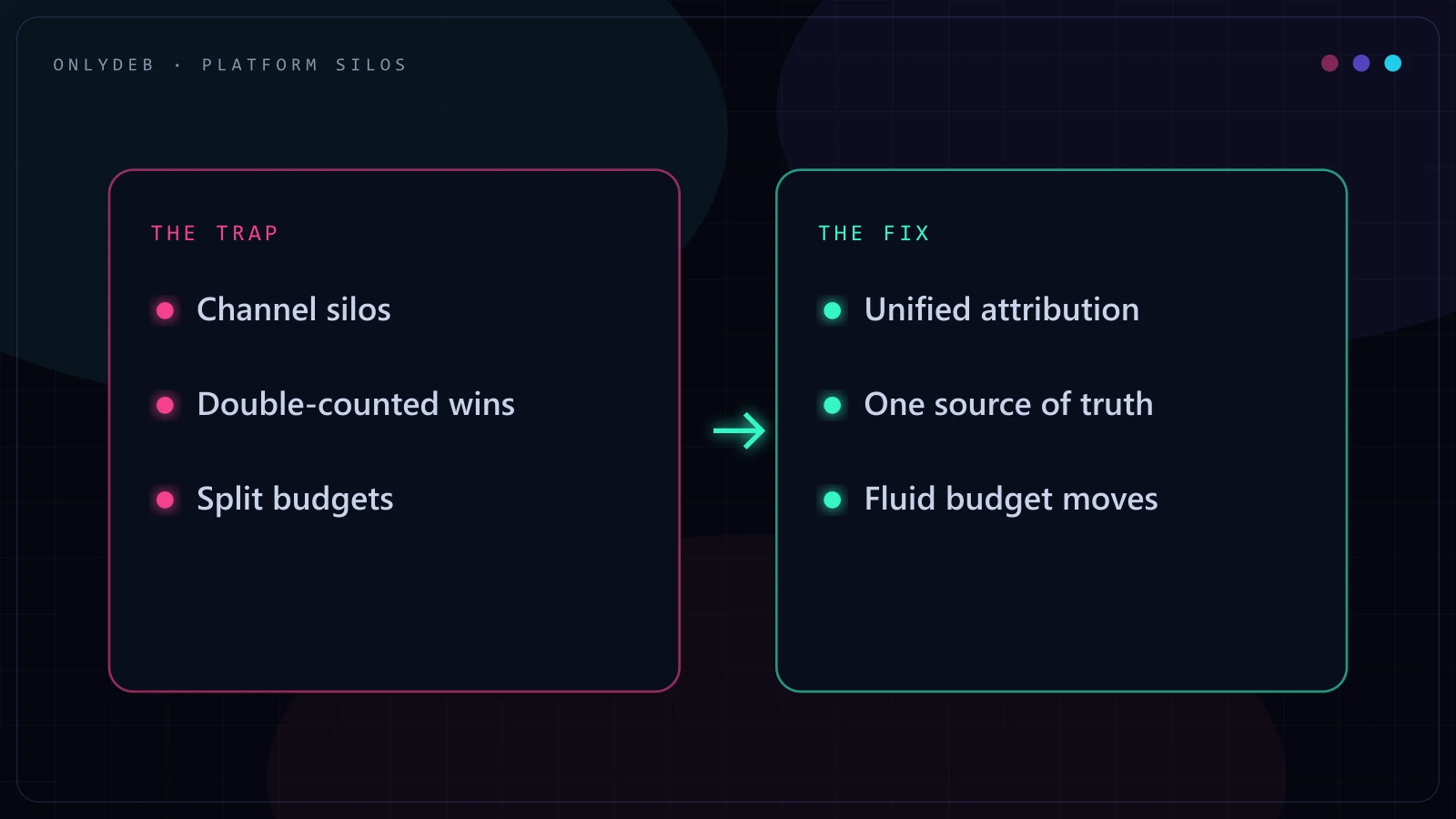
On one e-commerce account I managed, Google claimed credit, Meta claimed credit, and if I'd summed their reported conversions I'd have believed I had triple the real sales. That account eventually hit a 900% ROAS peak, but only after I stopped trusting platform-reported numbers and built a single source of truth.
The Fix:
- Source of Truth: Use GA4 or a third-party tool (Triple Whale, Northbeam) as the final arbiter.
- Lift Studies: Run "conversion lift" tests. Turn off Meta for 2 weeks. Did total sales drop? If so, by how much? That's the real value.
- Offline Conversions: Upload backend customer data to all platforms to match "leads" to "revenue."
Common Cross-Platform Mistakes
| Mistake | Impact | Solution |
|---|---|---|
| Copy-pasting Google headlines to Facebook | Low engagement, looks like spam | Write "social-first" copy for social platforms. |
| Ignoring Exclusion Lists | Wasted spend showing awareness ads to customers | Sync customer lists globally to exclude them. |
| Siloed Reporting | Bad budget decisions | Create a unified Looker Studio dashboard. |
Internal Links
Final Thoughts
Managing channels in isolation no longer works. In 2026, your customers are everywhere, and your strategy must be too. Unify your data, creative, and audiences, and the whole system starts outperforming any single channel.
Want someone to run all of this for you? Let's chat.