Inside Google's Operations Center I reviewed hundreds of accounts a quarter, and the same silent tax showed up everywhere: keywords scoring 4 or 5 paying nearly double what they needed to. Quality Score is still the gateway to lower CPCs and smarter AI bidding. This is the playbook I use to fix it for small businesses.
A small business owner once showed me an account where an agency had "optimized" everything except the one number that mattered. Their top keyword sat at Quality Score 4, and they were paying nearly twice what a competitor with tighter ads paid for the exact same click. Nothing in the monthly reports mentioned it. That silent tax is what this guide removes.
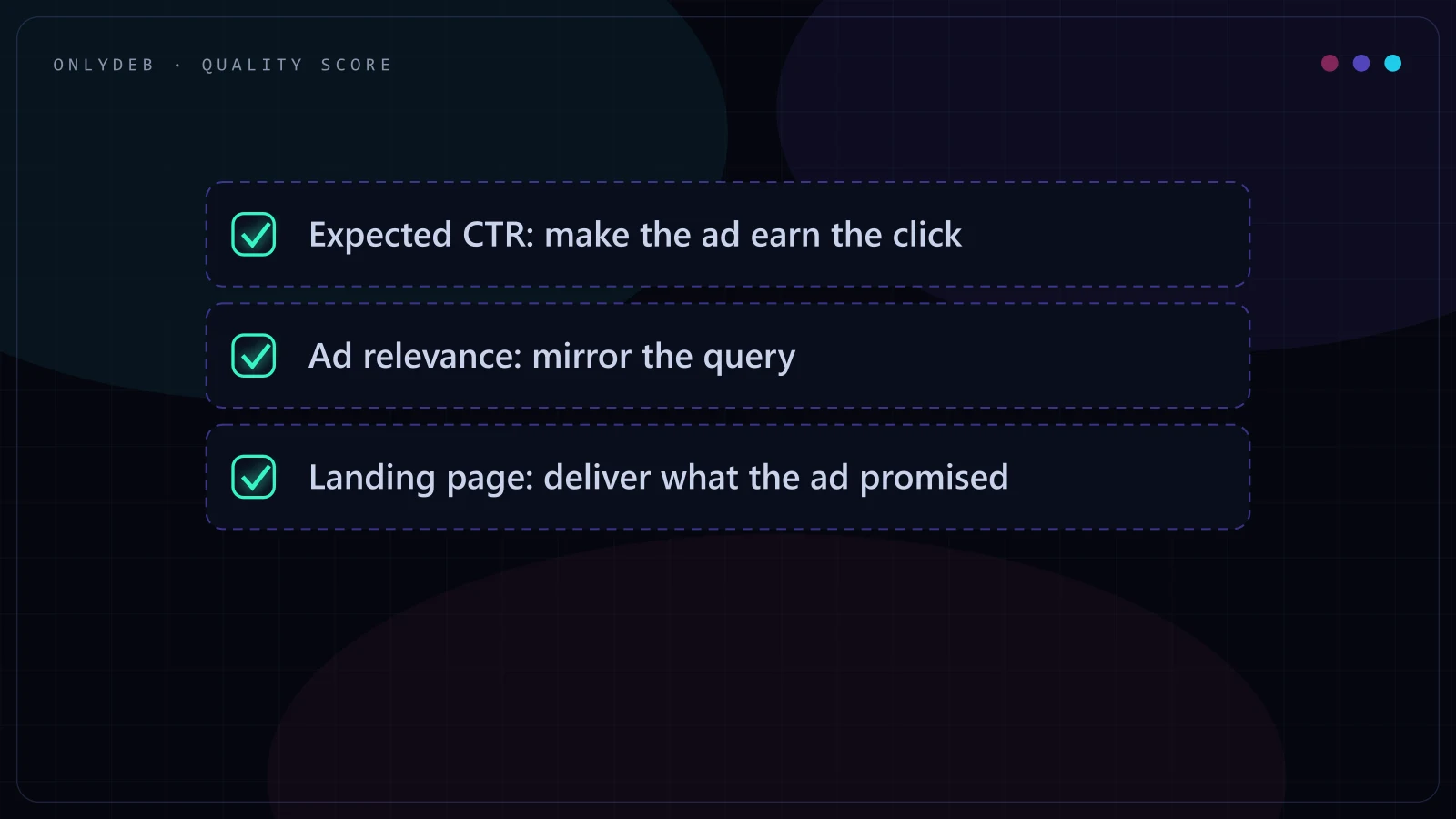
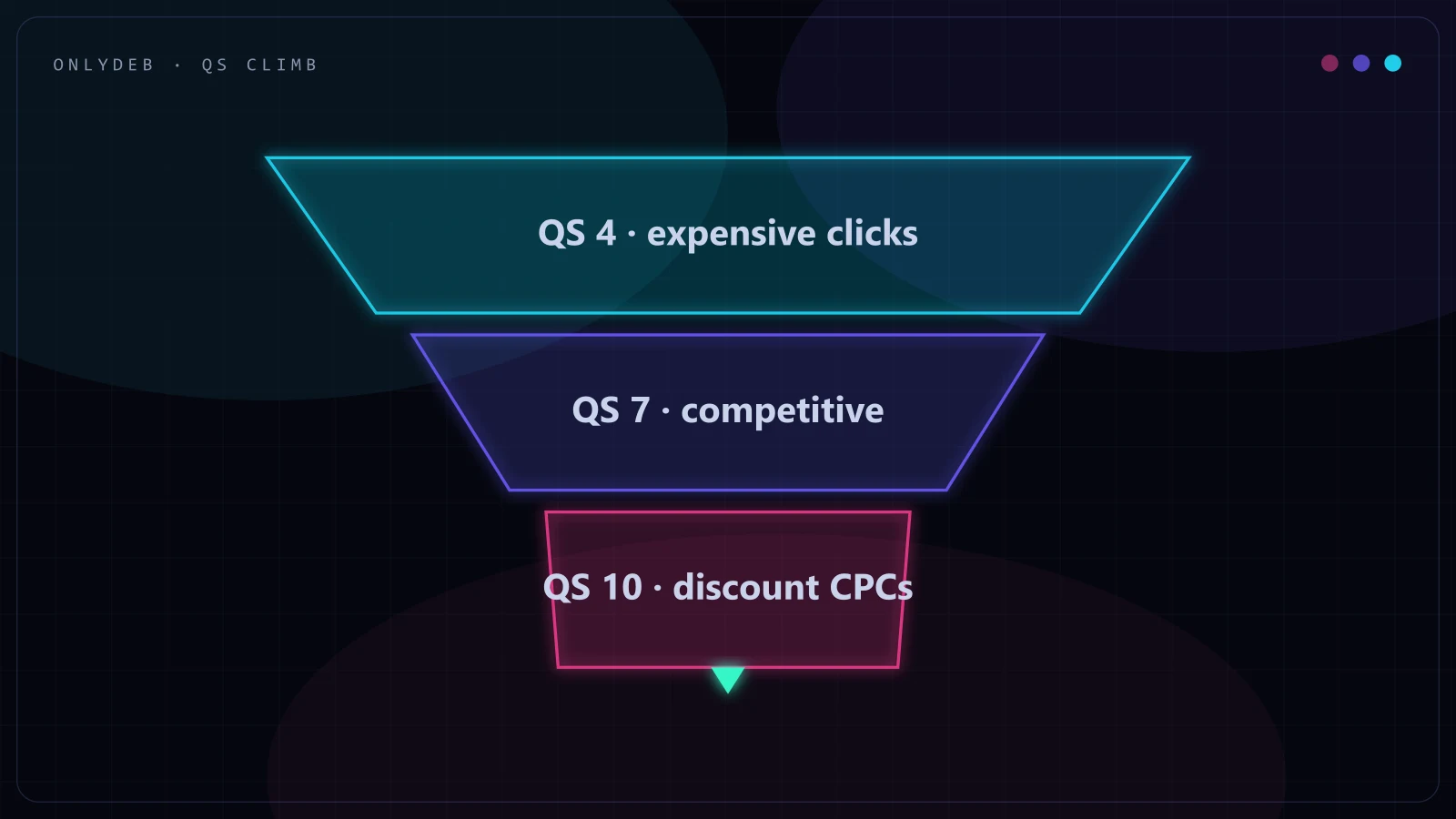
Quality Score is a 1-10 diagnostic score Google assigns to every keyword, based on expected click-through rate, ad relevance, and landing page experience. Google uses it to help decide what you pay per click: a keyword scoring 8 can cost roughly half as much as the same keyword scoring 5.
The Funnel-Aligned Quality Score Strategy
TOFU: Build Relevance and Block Waste
Use Manual CPC for branded search terms → control CPC, protect budget.
Focus on tightly grouped, intent-aligned keywords (exact/phrase match over broad).
Aggressively build negative keyword lists.
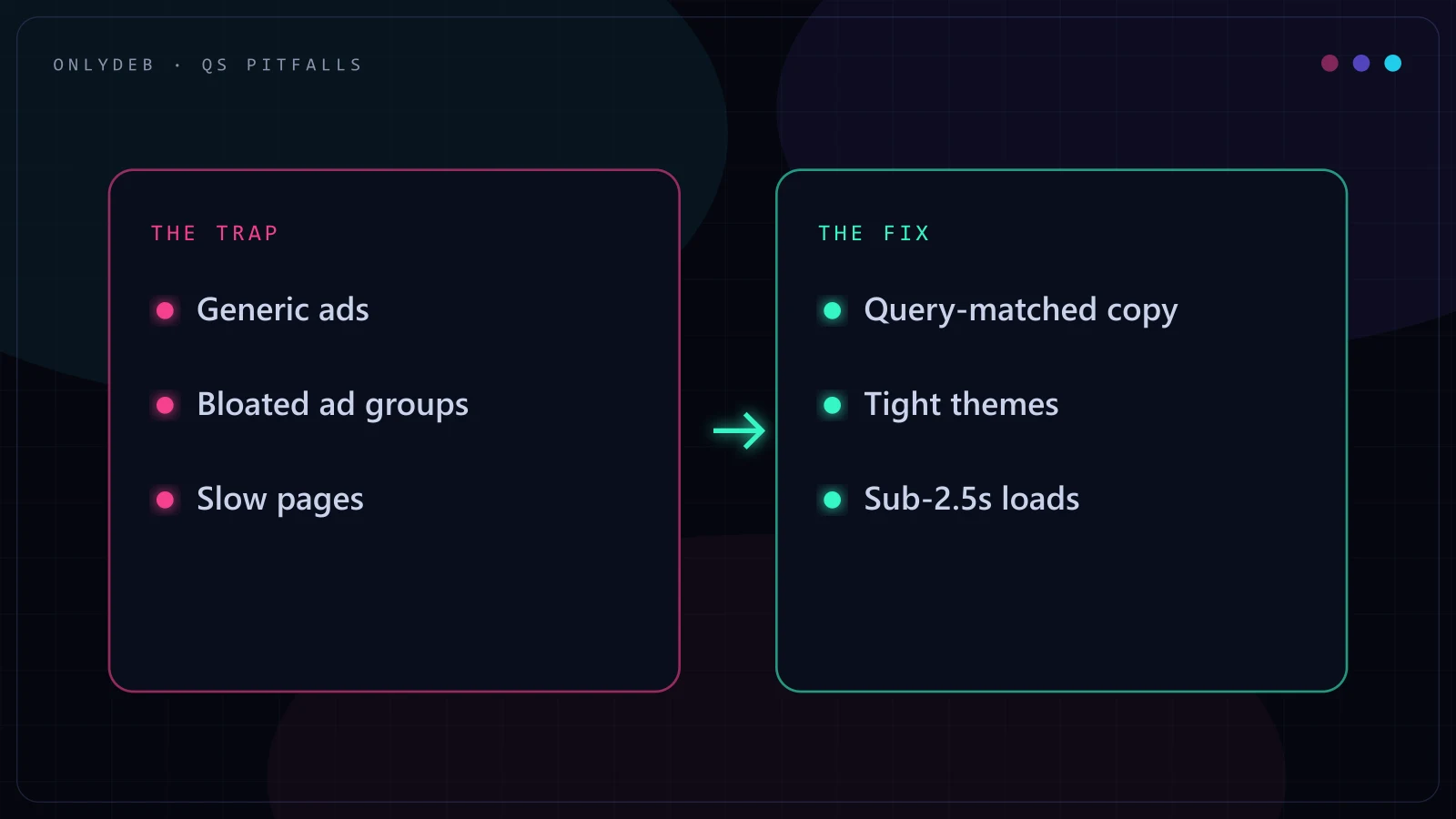
Ensure headlines match search intent precisely.
When I tightened keyword grouping and rebuilt the negative keyword list for Garage Doors LA, daily leads grew from 100 to more than 500. Most of that jump came from Quality Score improvements freeing up impression share, not from a bigger budget.
MOFU: Strengthen Ad Relevance + Landing Experience
Craft RSAs with distinct, high-quality headlines (no keyword stuffing).
Refresh low-rated assets monthly.
Align ad copy and landing page 1:1 (speed, content match).
BOFU: Optimize for User Satisfaction + Conversion
Make landing pages frictionless: clear CTAs, minimal forms.
Enable Enhanced Conversions → AI learns from true conversions, lifting QS.
Run regular Diagnostic reviews to spot low CTR, ad relevance, or landing experience issues.
Advanced Quality Score Tactics
On the account where I hit my highest ROAS ever, a 900% peak for an e-commerce brand, single-intent ad groups and constant negative-keyword pruning did as much work as the bidding strategy itself.
Quality Score Audit & Improvement Process
Stop guessing with your ad spend.
I build highly profitable Google Ads acquisition systems for ambitious brands. Stop burning cash on broad match and let's scale your ROAS properly.
In 2026, Quality Score is the hidden lever that decides whether AI bidding works smarter or bleeds your budget. At OnlyDeb, we help small businesses build campaigns that lift QS, lower CPC, and scale profitably. Let's improve yours.
Quest reward unlocked
◆
Free Google Ads account audit
You read the theory. The reward is me applying it to your account, free.
Hi, I'm Debroop (but my clients call me Deb). With 8+ years of experience from Google to leading global brands, I build and optimize PPC campaigns that actually scale. I focus on profitable growth rather than just spending budget, delivering results like a 900% Peak ROAS and a 400-500% annual average.